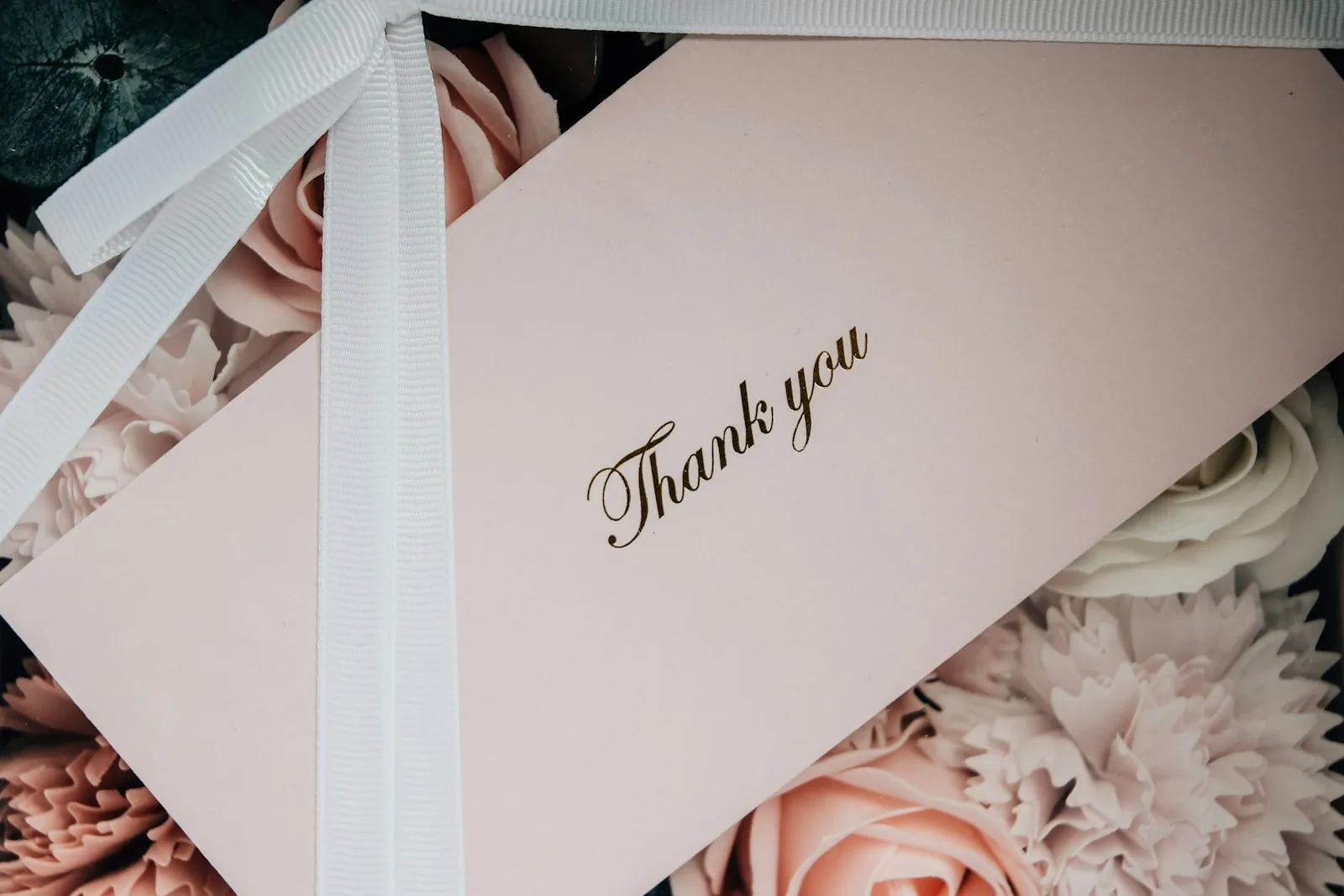
When to Send Wedding Thank-You Cards (and What to Write)
Aim for within three months of the wedding (two to three weeks for gifts that arrive early). Every good note does four things: name the gift, say how you'll use it, add a personal line, and look forward. Split the list and write a few a night.
The old rule of 'you have up to a year' is generous to the point of being unhelpful — it's technically true and practically a trap, because a card you mean to write in eleven months is a card you never write. The kinder and more realistic target is within three months of the wedding, and within two to three weeks for any gift that arrives before the day or at a shower. The sooner you write, the warmer and more specific the note, because the gift and the giver are both still fresh in your mind. Below is a clear timeline, a four-part structure that works for every card, and a system for getting through the whole list without losing your minds.
The realistic timeline
Different gifts have different clocks. Here's the schedule that keeps you gracious without turning your first months of marriage into an admin project.
- Gifts received before the wedding — write within two to three weeks — shower gifts and early-arriving registry parcels shouldn't wait for the wedding itself.
- Gifts received on or around the day — aim for within one month, and no later than three; this is the bulk of the list, so start early.
- Gifts that arrive late — write within two to three weeks of each one arriving, so nothing slips through the cracks after the main batch is done.
- Cash and honeymoon contributions — thank promptly and warmly, ideally within a month — and reference what it's helping with rather than the amount.
A structure that never fails
Every good thank-you card does the same four small things, in order. Follow them and even a two-line note feels personal rather than form-letter.
- Name the specific gift. 'Thank you for the beautiful serving bowl' beats 'thank you for the lovely gift' every time — it proves you know what they gave.
- Say how you'll use it. A line about it having its first outing at Sunday lunch, or taking pride of place on the shelf, makes the gift feel appreciated.
- Add a personal line about the person. Reference how good it was to have them there, or that you're overdue a catch-up — one sentence that could only be addressed to them.
- Look forward. End by looking ahead — to cooking for them, to seeing them soon, to the next time you're together.
Put together, it reads like this: "Thank you so much for the beautiful serving bowl — it's already had its first outing at Sunday lunch. It meant the world to have you both there on the day, and we can't wait to have you over to cook for you soon." Four sentences, thirty seconds, and it lands as genuinely warm.
A few special cases
Some gifts need slightly different handling, and knowing the convention saves you a moment's hesitation over every card.
- Cash or a honeymoon contribution: thank them warmly and mention what it's going towards — the honeymoon, the new home — but never state the amount.
- A group gift: write to each person individually where you can; if it was a large office collection, one warm note to the group is acceptable.
- A gift you didn't love: thank them for the thought and their generosity, sincerely and without fibbing about adoring it. Warmth covers a multitude.
- Guests who gave no gift: a short note thanking them simply for celebrating with you is a gracious touch, never an obligation.
Who gets a card — and does it have to be handwritten?

Two questions come up for every couple. First, who actually needs a thank-you? The simple answer: anyone who gave a gift, whether it arrived at a shower, on the day or by mail, plus a note to anyone who went notably out of their way — the people who hosted a shower, gave a reading, or traveled a long way to be there. A short card to guests who came but didn't give a gift is a gracious extra, never an obligation.
Second, does it have to be handwritten? Yes — this is the one place tradition genuinely still holds, and for good reason. A handwritten note carries a warmth a text or email simply can't, and guests notice the difference. It doesn't need to be long or eloquent; four honest sentences in your own hand beat a polished paragraph sent from your phone. Order thank-you cards in the same suite as your invitations so they match the day, keep a stack and a good pen somewhere handy, and knock out a few whenever you have a spare ten minutes. The effort is modest; the goodwill it buys is not.
Sample notes you can adapt
A blank card is the hardest part. Steal the bones of these and swap in the specifics — they cover the situations you'll actually be writing for.
- For a physical gift: "Thank you so much for the beautiful cheese board — it had its first outing at our housewarming and was admired by everyone. It meant so much to have you with us on the day, and we can't wait to have you over soon."
- For a cash gift or honeymoon contribution: "Thank you for your incredibly generous gift. You helped make our honeymoon in Italy unforgettable — we toasted you over dinner in Florence. It was wonderful to celebrate with you, and we're overdue a proper catch-up."
- For a group or office gift: "Thank you all so much for the wonderful gift — the coffee machine has already become the heart of our kitchen. We're so grateful for your kindness and for celebrating with us."
- For guests who came but gave no gift: "Thank you so much for being there on our wedding day — having you celebrate with us was a gift in itself, and a memory we'll always treasure."
Make it manageable
The reason thank-you cards drag on is that couples try to write all of them in one grim, guilt-laden sitting. Don't. Split the list between both partners along whoever knows each guest better, write five a night rather than fifty in one go, and — crucially — keep a running record of who gave what as gifts arrive, before and during the wedding. Trying to reconstruct that list from memory after the honeymoon is what derails everyone. A simple spreadsheet or a notebook by the gift table does the job.
The mistakes to avoid
A few predictable slips are what turn thank-yous into a source of guilt. Sidestep these and the whole job stays gracious and manageable.
- Leaning on the 'one year' myth: a card you mean to write in eleven months is a card you never write. Treat three months as the real deadline.
- Sending generic notes: 'thank you for the lovely gift' reads as a form letter — always name the specific gift, even if it means checking your list.
- Naming the amount of a cash gift: thank warmly and reference what it helped with, but never state the sum.
- Not tracking gifts as they arrive: reconstructing who gave what from memory after the honeymoon is what derails everyone; keep the list live from the first shower gift.
- Writing them all in one sitting: fifty cards in one grim afternoon is why couples give up halfway. Five a night, split between you, gets it done painlessly.
Still choosing the stationery itself? The houses in our best online wedding invitations guide print matching thank-you cards, so your correspondence bookends the day beautifully.